T3 Code Decoded
A complete product guide and source-grounded technical field guide to T3 Code across web, desktop, mobile, six providers, remote environments, reviews, previews, and device testing.
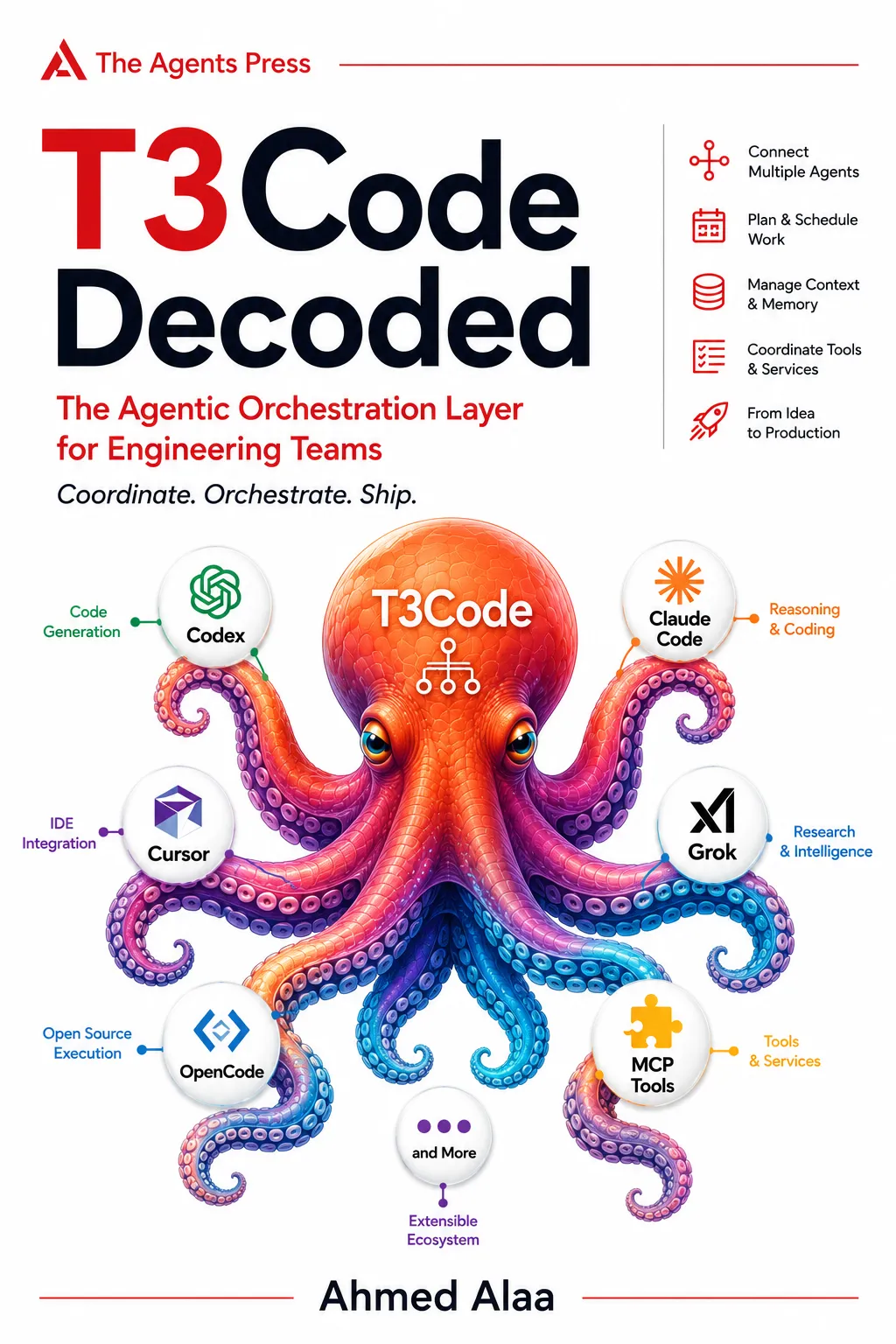
Use the whole product. Then follow it all the way down.
Start with installation, daily workflows, remote work, reviews, mobile, and device testing. Continue from one user action into provider processes, durable events, checkpoints, clients, and recovery.
Two paths through T3 Code
The product guide explains what T3 Code offers and how to use it: installation, onboarding, projects, threads, worktrees, providers, permissions, files, terminals, previews, SnapShots, source control, remote environments, mobile clients, usage, updates, and simulator or emulator testing.
The technical guide opens the implementation behind those workflows: server and client ownership, durable orchestration, provider adapters, persistence, recovery, connection routes, native integrations, packaging, and release operations.
What the technical path makes obvious
T3 Code is easy to mistake for an agent. It is more useful—and more technically interesting—to see it as a control surface and execution boundary around several independent agent runtimes. Providers own their model loops and native context. T3 owns durable orchestration history and query projections, coordinates workspace operations, and gives clients shared semantics with deliberate platform-specific capabilities. Some delivery and side-effect machinery remains intentionally ephemeral; the book marks those seams instead of calling all server state durable.
That division of ownership is the spine of the technical path. The product path gives each boundary a concrete user purpose before the implementation chapters name it.